Last updated: August 6, 2026
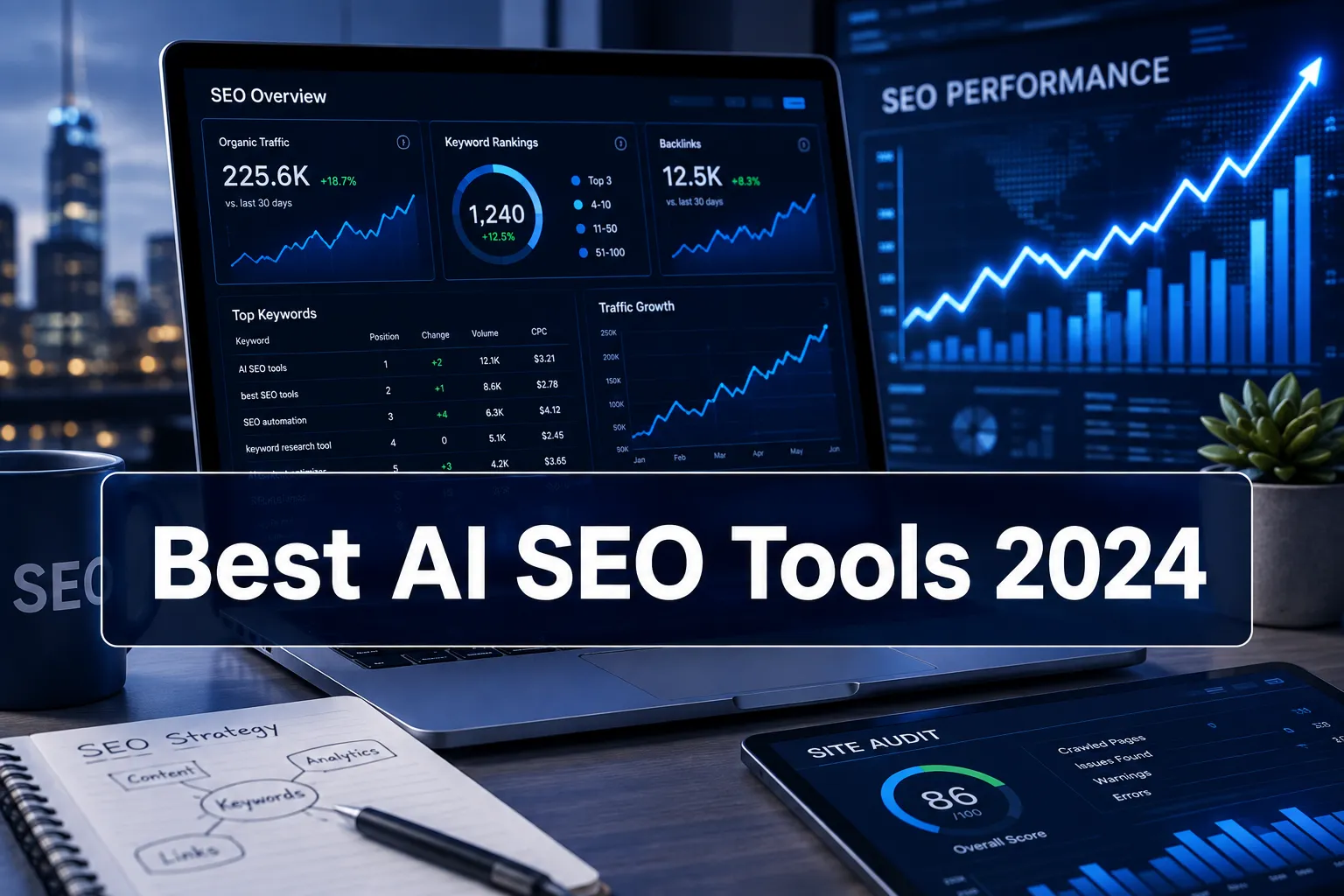
Quick Answer: The best AI SEO tools in 2026 include Semrush, Ahrefs, Surfer SEO, Clearscope, and Jasper, each covering different needs from keyword research to content optimization and technical audits. Choosing the right one depends on your budget, team size, and whether you need content writing support, backlink analysis, or site health monitoring. Most professionals use two to three tools in combination rather than relying on a single platform.
Key Takeaways
- AI SEO tools automate time-consuming tasks like keyword clustering, content briefs, and site audits, freeing up time for strategy.
- The top platforms in 2026 span a wide price range, from free tiers (Google Search Console, Ubersuggest) to enterprise plans exceeding $500/month.
- Content-focused tools like Surfer SEO and Clearscope consistently help writers produce pages that rank faster than unoptimized drafts.
- AI SEO tools work best as assistants, not replacements, for experienced SEO specialists who can interpret the data.
- Small businesses get the most value from tools with built-in content editors and keyword research combined, such as Surfer SEO or NeuronWriter.
- Technical SEO tools like Screaming Frog and Sitebulb now include AI-assisted issue prioritization, cutting audit time significantly.
- Free tools do exist and work, but they typically lack depth for competitive niches or large sites.
- Beginners should start with one all-in-one platform before layering in specialized tools.
What Are AI SEO Tools and How Do They Work
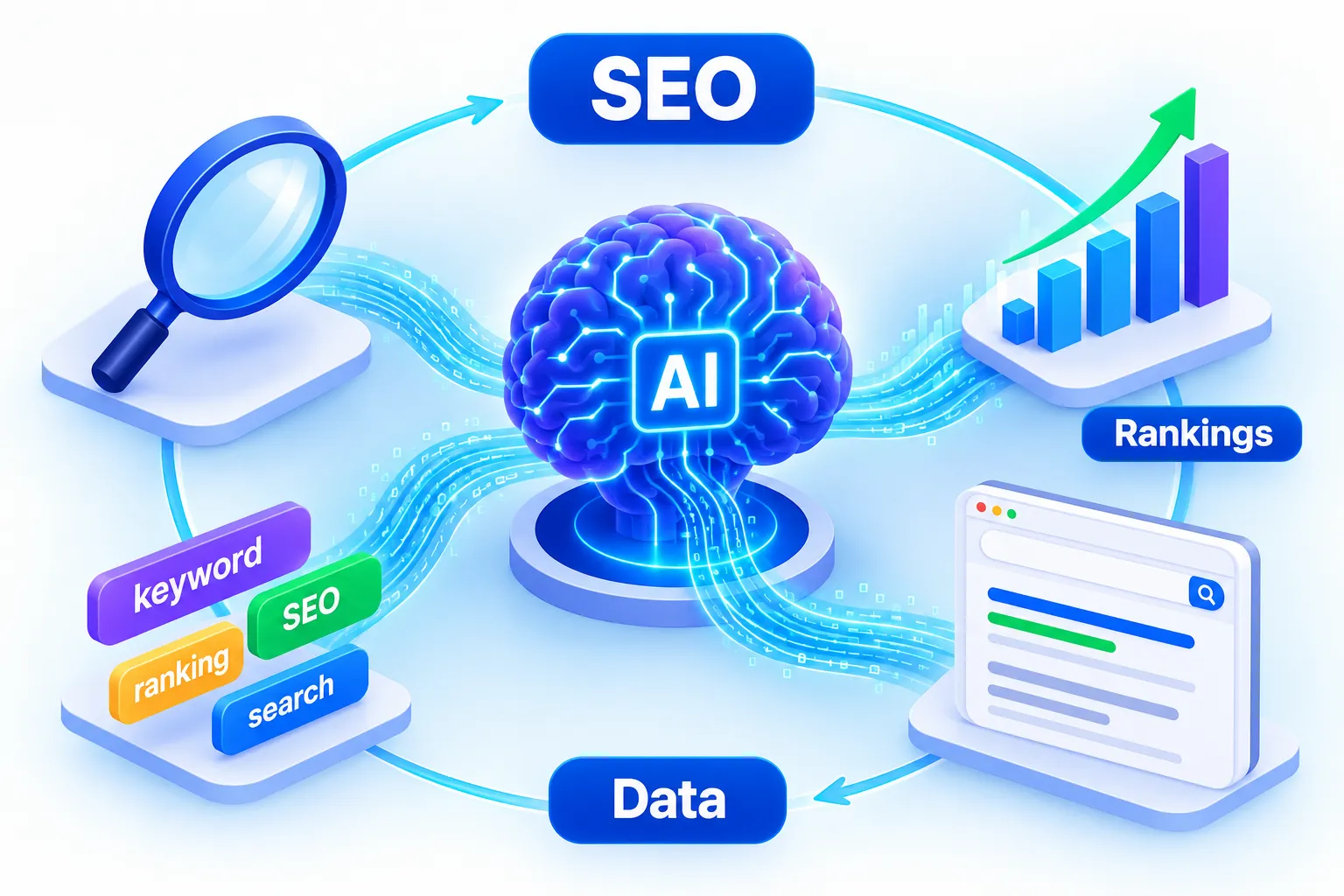
AI SEO tools are software platforms that use machine learning, natural language processing, and large datasets to automate or enhance search engine optimization tasks. Instead of manually analyzing hundreds of keywords or reading through competitor pages line by line, these tools process data at scale and surface actionable recommendations in seconds.
Most AI SEO tools work by:
- Crawling and indexing data from search engines, competitor sites, and your own domain.
- Running NLP analysis on top-ranking pages to identify what topics, entities, and phrases Google associates with a given query.
- Scoring your content against those top-ranking pages and suggesting specific improvements.
- Automating reporting on rankings, backlinks, and site health so you can spot problems before they hurt traffic.
The key difference from traditional SEO software is the layer of interpretation. Older tools showed you data. AI tools now tell you what to do with it.
Best AI SEO Tools Compared for 2026
The 15 best AI SEO tools to dominate search rankings in 2024 (and still relevant in 2026) cover the full SEO workflow. Here is a structured overview of the top platforms by primary use case:
| Tool | Primary Use | Best For | Free Tier |
|---|---|---|---|
| Semrush | All-in-one SEO | Agencies, enterprises | Limited |
| Ahrefs | Backlink & keyword research | Link builders, content teams | Webmaster tools only |
| Surfer SEO | Content optimization | Writers, content marketers | No |
| Clearscope | Content grading | Editorial teams | No |
| Jasper AI | AI content writing | Content teams at scale | Trial only |
| Frase.io | Brief creation + writing | Solo creators, small teams | Trial only |
| NeuronWriter | Content + NLP optimization | Budget-conscious teams | No |
| Screaming Frog | Technical site audits | Developers, SEO specialists | Up to 500 URLs |
| Google Search Console | Performance tracking | Everyone | Yes, fully free |
| RankMath / Yoast | On-page WordPress SEO | WordPress site owners | Yes |
| Ubersuggest | Keyword research | Beginners, solopreneurs | Limited daily searches |
| MarketMuse | Topic authority mapping | Content strategists | Free plan available |
| Sitebulb | Visual technical audits | Technical SEOs | Trial only |
| BrightEdge | Enterprise SEO intelligence | Large enterprises | No |
| Alli AI | Automated on-page changes | Large sites needing bulk edits | Trial only |
For a deeper look at how these tools stack up in a real-world stack, see this guide to building a 7-tool AI SEO stack for new sites.
Do AI SEO Tools Actually Improve Rankings
Yes, AI SEO tools improve rankings when used correctly, but they do not guarantee results on their own. The improvement comes from reducing the gap between what Google rewards and what your content currently delivers.
Specifically, tools like Surfer SEO and Clearscope help writers match the semantic depth of top-ranking pages. Sites that use content optimization platforms consistently report faster ranking timelines for new pages, though exact lift varies by niche competitiveness and domain authority. The underlying mechanism is straightforward: AI tools identify which related terms, headings, and content structures appear in top results, and your content improves when it mirrors those patterns.
What actually moves rankings:
- Filling topical gaps identified by NLP analysis
- Fixing technical issues found in site audits (crawlability, Core Web Vitals, broken links)
- Building content clusters around high-value topics rather than isolated pages
- Improving internal linking based on AI-generated suggestions
What does not work: Running AI-generated content without editing, chasing keyword density scores mechanically, or ignoring backlinks entirely while focusing only on on-page scores.
AI SEO Tools Pricing and Cost Comparison
Pricing for AI SEO tools in 2026 ranges from completely free to several thousand dollars per month for enterprise platforms. Here is a practical breakdown by budget tier:
Free or under $30/month (starter tier):
- Google Search Console (free)
- Ubersuggest (free limited / $12/month paid)
- RankMath Pro ($69/year for individuals)
$30 to $150/month (small business tier):
- Surfer SEO (starts around $89/month)
- Frase.io (starts around $45/month)
- NeuronWriter (AppSumo lifetime deals available)
$150 to $500/month (professional tier):
- Ahrefs (starts around $129/month)
- Semrush (starts around $140/month)
- Clearscope (starts around $170/month)
$500+/month (enterprise tier):
- MarketMuse (enterprise plans)
- BrightEdge (custom pricing)
- Conductor (custom pricing)
For budget-conscious teams, lifetime deals on platforms like NeuronWriter or tools reviewed on AppSumo can cut costs significantly. You can also explore free keyword research methods using no-cost data sources to supplement paid tools.
AI SEO Tools for Small Businesses vs Enterprises
Small businesses and enterprises need fundamentally different things from AI SEO tools, so the best choice depends on scale, not just features.
Small businesses benefit most from tools that combine keyword research, content optimization, and basic site auditing in one platform. Paying for three separate enterprise tools rarely makes sense when a $89/month all-in-one covers 80% of the need. Good choices: Surfer SEO, Frase.io, or Semrush’s entry plan.
Enterprises need tools that handle thousands of pages, integrate with CMS platforms, support team collaboration, and produce executive-level reporting. BrightEdge, Conductor, and Semrush Business plans are built for this. They also need API access, white-label reporting, and dedicated support.
Decision rule:
- Choose a small-business tier tool if your site has fewer than 500 pages and your team is under five people.
- Choose an enterprise platform if you manage multiple domains, need workflow approvals, or require custom data integrations.
For WordPress-based small businesses, tools like Squirrly SEO for WordPress rankings or the SEO Booster plugin with Google Search Console integration offer strong value without enterprise pricing.
Free AI SEO Tools That Actually Work
Several free AI SEO tools deliver genuine value, particularly for site owners just starting out or those supplementing a paid stack.
Top free options:
- Google Search Console: The most important free SEO tool available. It shows which queries drive impressions and clicks, flags indexing issues, and integrates with most paid platforms.
- Google Analytics 4: Pairs with Search Console to show what happens after a user lands on your page.
- Ahrefs Webmaster Tools: Free for verified site owners; shows backlinks and top organic keywords for your own domain.
- Screaming Frog (free tier): Crawls up to 500 URLs and identifies broken links, redirect chains, and missing meta tags.
- Ubersuggest (free tier): Limited daily keyword searches but useful for basic research.
Common mistake: Relying on free tools alone in a competitive niche. Free tools give you the data; paid AI tools tell you what to do with it.
How to Use AI SEO Tools for Keyword Research
AI SEO tools make keyword research faster and more strategic by clustering related terms, estimating traffic potential, and identifying gaps your competitors have not filled.
Step-by-step process:
- Start with a seed keyword in your tool of choice (Ahrefs, Semrush, or Ubersuggest).
- Export keyword ideas and filter by search volume, keyword difficulty, and search intent (informational, commercial, transactional).
- Use AI clustering features (available in Semrush and Ahrefs) to group keywords by topic rather than treating each as a separate page.
- Check SERP features for each keyword, featured snippets, People Also Ask boxes, and image packs signal what content format Google prefers.
- Prioritize by opportunity score, which most AI tools calculate by combining volume, difficulty, and your site’s current authority.
For a practical approach that does not require expensive tools, see this guide to keyword research using free data sources.
AI SEO Tools for Content Creation and Optimization
Content optimization is where AI SEO tools deliver the clearest, most measurable value. Tools like Surfer SEO, Clearscope, and Frase.io analyze the top 10 to 20 ranking pages for a query and produce a brief that tells writers exactly what to cover.
What these tools provide:
- A target word count based on competitor averages
- A list of semantically related terms to include (and how often)
- Suggested headings and subheadings based on what ranks
- A real-time content score that updates as you write
Choose Surfer SEO if you want a content editor with a live score and Google Docs integration. Choose Clearscope if your editorial team needs a clean, distraction-free grading interface. Choose Frase.io if you want brief creation and AI writing assistance in one cheaper package.
For prompt strategies that produce content that actually ranks, see AI content prompts that rank.
AI SEO Tools vs Traditional SEO Software
AI SEO tools differ from traditional SEO software primarily in how they interpret data. Traditional tools (early versions of Moz, Majestic, or even early Ahrefs) showed raw metrics: domain authority, backlink counts, keyword volume. You had to decide what to do next.
AI-powered platforms now add a recommendation layer. Semrush’s AI writing assistant, Surfer’s content score, and MarketMuse’s topic modeling all translate data into specific actions. This reduces the skill gap for beginners and speeds up execution for experts.
Traditional SEO software still wins for:
- Raw data accuracy and historical depth
- Custom reporting and API access
- Situations where you need the data without AI interpretation
AI SEO tools win for:
- Speed of content brief creation
- Identifying topical gaps at scale
- Automating on-page recommendations across large sites
For a direct head-to-head on two well-known platforms, see Labrika vs Ahrefs: which SEO tool fits your needs.
Common Mistakes People Make With AI SEO Tools
Most failures with AI SEO tools come from misuse, not from the tools themselves. Here are the most frequent errors:
- Publishing AI-generated content without editing. Search engines and readers both detect low-effort AI output. Always edit for accuracy, tone, and original insight.
- Chasing content scores mechanically. A Surfer score of 90 does not guarantee a top-three ranking. The score is a proxy, not a promise.
- Ignoring technical SEO while focusing only on content. A perfectly optimized article on a site with crawl errors will still underperform.
- Using too many tools at once. Overlapping data from five platforms creates confusion. Start with two tools and add more only when you have a specific gap.
- Skipping competitor analysis. AI tools surface keyword opportunities, but understanding why competitors rank requires reading their content, not just measuring it.
- Treating keyword difficulty scores as absolute. Difficulty scores vary between tools and do not account for your site’s specific authority in a niche.
AI SEO Tools for Technical SEO and Site Audits
Technical SEO tools with AI features help identify and prioritize site health issues that block rankings, including crawl errors, slow page speeds, duplicate content, and broken internal links.
Top technical AI SEO tools:
- Screaming Frog SEO Spider: The industry standard for crawling. The paid version integrates with Google Analytics and Search Console for richer analysis.
- Sitebulb: Adds visual diagrams and AI-assisted issue prioritization on top of Screaming Frog-style crawling.
- Semrush Site Audit: Cloud-based, runs on a schedule, and flags issues with severity ratings.
- Ahrefs Site Audit: Strong at finding internal linking gaps and orphaned pages.
For WordPress sites, the SEO Booster plugin with automatic internal linking and 404 fixes handles many technical tasks without a separate audit tool.
Which AI SEO Tool Is Best for Beginners
Beginners should start with Semrush or Ubersuggest because both combine keyword research, site auditing, and competitor analysis in a single dashboard with guided workflows.
Best beginner options ranked:
- Semrush (entry plan): Covers everything in one place. The learning curve is moderate but the guided project setup walks new users through the basics.
- Ubersuggest: Simpler interface, lower cost, and good for understanding keyword fundamentals before moving to a more complex tool.
- RankMath (WordPress): If your site runs on WordPress, RankMath’s free version handles on-page SEO with AI suggestions built in.
- Frase.io: Best for beginners who write content regularly and want AI-assisted briefs without a steep learning curve.
Avoid starting with enterprise tools like BrightEdge or Conductor. They require significant configuration and assume prior SEO knowledge.
AI SEO Tools That Integrate With Google Search Console
Google Search Console integration is a standard feature in most paid AI SEO tools, and it significantly improves the quality of recommendations by grounding them in your actual traffic data.
Tools with strong GSC integration:
- Semrush: Pulls GSC data directly into position tracking and site audit reports.
- Ahrefs: Connects GSC to show which of your pages have impressions but low click-through rates, a key optimization signal.
- Surfer SEO: Uses GSC data to identify which existing pages to optimize first based on current rankings.
- SEO Booster (WordPress plugin): Displays GSC data directly inside the WordPress dashboard. See the full SEO Booster review for WordPress.
Why GSC integration matters: Without it, AI tools work from third-party estimates of your traffic. With it, they work from verified data, making recommendations far more accurate.
Can AI SEO Tools Replace Hiring an SEO Specialist
AI SEO tools cannot fully replace an experienced SEO specialist, but they do reduce how many hours of specialist time a project requires. The tools handle data collection, pattern recognition, and routine recommendations. What they cannot do is develop strategy, interpret ambiguous signals, manage client relationships, or adapt to algorithm changes that have not yet been documented.
Where AI tools replace specialist work:
- Generating content briefs
- Running routine site audits
- Keyword clustering and opportunity scoring
- On-page optimization checklists
Where a specialist is still needed:
- Diagnosing unusual traffic drops
- Building link acquisition strategies
- Aligning SEO with broader business goals
- Evaluating whether AI recommendations fit the brand’s voice and audience
For teams without a full-time SEO hire, a combination of two to three well-chosen AI tools plus occasional specialist consulting covers most needs at a fraction of the cost of a full-time role.
Conclusion
The 15 best AI SEO tools to dominate search rankings in 2024 remain the foundation of competitive SEO strategy in 2026. The landscape has matured: AI tools now cover every part of the workflow, from keyword discovery to content scoring to technical audits, and pricing options exist for every budget.
Actionable next steps:
- Audit your current stack. If you are using more than three tools with overlapping features, consolidate.
- Connect Google Search Console to whichever platform you use most. This single step improves the accuracy of every recommendation you receive.
- Pick one content optimization tool (Surfer SEO, Clearscope, or Frase.io) and use it for every new article you publish for the next 90 days. Measure ranking timelines before and after.
- Run a technical audit with Screaming Frog or Semrush Site Audit. Fix the highest-severity issues before investing more in content.
- Do not skip human editing. AI tools produce better inputs; humans still produce better outputs.
For a broader look at how AI tools are reshaping digital marketing workflows, see the guide to best AI-enhanced SEO and design tools in 2026.
FAQ
What is the single best AI SEO tool for most users? Semrush is the most versatile option for most users because it covers keyword research, site auditing, content optimization, and competitor analysis in one platform. Ahrefs is a close second, particularly for backlink-heavy strategies.
How long does it take to see results from AI SEO tools? Most users see measurable ranking improvements within 60 to 90 days of consistently applying AI tool recommendations, assuming the site has no major technical issues and the niche is not extremely competitive.
Are AI SEO tools safe to use with Google’s guidelines? Yes, using AI SEO tools is safe. Google’s guidelines target low-quality, mass-produced content, not the use of software to research and optimize content. The tools themselves are neutral; how you use the output determines compliance.
What is the difference between Surfer SEO and Clearscope? Surfer SEO offers a full content editor with a live optimization score and is better for writers who want real-time feedback. Clearscope focuses on content grading and term recommendations and is preferred by editorial teams that want a cleaner interface.
Can I do SEO without paying for any tools? Yes, but with limitations. Google Search Console, Google Analytics, and Ahrefs Webmaster Tools cover the basics for free. Paid tools become necessary in competitive niches where data depth and content scoring make a measurable difference.
Which AI SEO tool is best for e-commerce sites? Semrush and Ahrefs are the strongest choices for e-commerce because they handle large-scale keyword research, product page optimization, and competitor gap analysis well. For on-page automation across thousands of product pages, Alli AI is worth evaluating.
Do AI SEO tools work for local SEO? Yes. Semrush, BrightLocal, and Whitespark all offer AI-assisted features for local SEO, including citation tracking, Google Business Profile optimization, and local keyword research.
Is Jasper AI a good SEO tool? Jasper is primarily a content writing tool, not a full SEO platform. It works best when paired with a content optimization tool like Surfer SEO or Clearscope that provides the SEO brief Jasper then writes from.
What is the cheapest way to get started with AI SEO tools? Start with Google Search Console (free), add RankMath to your WordPress site (free), and use Ubersuggest’s free tier for keyword research. This zero-cost stack handles the fundamentals before you invest in paid tools.
How do AI SEO tools handle multilingual SEO? Semrush and Ahrefs both support keyword research and ranking tracking across multiple languages and regions. Content optimization tools like Surfer SEO have more limited multilingual support, so check language availability before purchasing.
References
- Semrush. (2023). Semrush product documentation and feature overview. https://www.semrush.com
- Ahrefs. (2023). Ahrefs features and use cases. https://ahrefs.com
- Surfer SEO. (2023). Content editor and NLP optimization methodology. https://surferseo.com
- Google. (2023). Google Search Central: Search Console overview. https://search.google.com/search-console/about
- Clearscope. (2023). Content optimization platform overview. https://www.clearscope.io
- Frase. (2023). Frase.io product documentation. https://www.frase.io
- MarketMuse. (2022). Topic modeling and content intelligence methodology. https://www.marketmuse.com